
How Queen Victoria’s 64-year reign transformed a small island nation into history’s largest empire—and created the modern world in the process
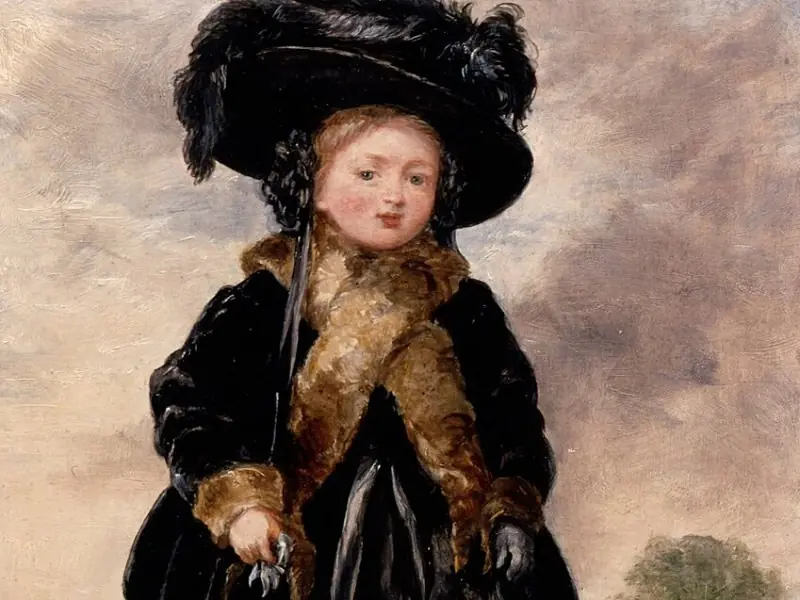
Imagine London on June 20, 1837. An 18-year-old girl, barely five feet tall, receives news that her uncle King William IV has died. Alexandrina Victoria of Hanover never expected the throne so young, yet she would occupy it for nearly 64 years—longer than any British monarch before her. When she died in 1901, the world had transformed utterly. The Victorian Era she defined had witnessed the Industrial Revolution, the height of the British Empire, and the creation of modern industrial society. Her name became synonymous with an age when one small island nation ruled a fifth of the earth’s landmass and shaped global civilization.
The Victorian Era (1837-1901) coincided with what historians call “Pax Britannica”—the British Peace—spanning from Waterloo (1815) to World War I’s outbreak (1914). This century without major European wars enabled unprecedented technological, social, and political progress. Yet the Victorian Era was also marked by brutal colonial expansion, stark inequality, and cultural contradictions that still resonate today. Understanding this period means understanding how modern industrial civilization emerged—and what costs accompanied its creation.

The Empire: Global Dominance and Colonial Expansion
Queen Victoria presided over history’s largest state—a metropolis controlling vast colonial possessions across every continent. The Victorian Era saw Britain’s territorial holdings expand relentlessly, driven by economic ambition, strategic rivalry, and ideological conviction in British superiority.
In Asia, this expansion acquired the romantic name “Great Game”—the geopolitical rivalry between British and Russian empires for Central Asian and Middle Eastern dominance. This contest shaped borders from Afghanistan to Persia that still generate regional instability. British agents and Russian officers competed for influence through diplomacy, espionage, and occasional military confrontation.
African expansion proved even more dramatic. The Victorian Era’s “Scramble for Africa” (1880s-1900) saw Britain, France, Germany, Italy, Spain, Portugal, and Belgium partition virtually the entire continent. The Berlin Conference of 1884-1885 formalized this division without African representation, creating colonial boundaries that independent African nations still struggle with. British control extended from Egypt to South Africa, creating a continuous corridor of dominance.
Demographic changes accompanied imperial growth. Between 1851 and 1901, Britain’s population nearly doubled—from 16 to 30 million—while over 15 million emigrated to the United States, Australia, New Zealand, Canada, and South Africa. This human tide spread British culture, institutions, and conflicts across the globe, creating the “Anglosphere” that remains politically significant today.

Read More:
Industrial Revolution: Technology Transforms Society
The Victorian Era’s most profound changes occurred at home. When Victoria ascended, Britain was already industrializing; when she died, it had become the world’s first industrial society. The relative peace of her reign allowed continuous technological innovation that reshaped daily existence.
Urban infrastructure modernized dramatically. Electric street lighting replaced gas lamps. Sidewalks (pavements) separated pedestrians from horse-drawn traffic. Central water supply and sewerage systems reduced cholera outbreaks. The London Underground opened in 1863—the world’s first subway—while railway networks connected even remote villages to metropolitan centers. Advanced machine tools, public postal services, and eventually telephones created unprecedented connectivity.
The Victorian Era produced remarkable inventions: photography (permanently capturing images), chocolate (mass-produced confectionery), pneumatic tires (enabling bicycle and automobile transport), radio (wireless communication), and X-rays (medical imaging). In 1851, the Great Exhibition at London’s Crystal Palace displayed these innovations alongside art from Britain, America, Russia, and beyond. Admission proceeds funded the Science Museum, institutionalizing Britain’s commitment to technological progress.
Scientific revolution accompanied mechanical invention. Charles Darwin’s theory of natural selection, published in 1859, transformed biology and challenged religious orthodoxy. The Victorian Era thus created both the technological foundations of modernity and the intellectual frameworks for understanding humanity’s place in nature.

Economic Reforms and Social Class
The Conservative Party under Robert Peel implemented crucial economic reforms. Progressive income tax (1842) replaced regressive indirect taxation, redirecting resources from colonial development to domestic welfare. Historians identify this period as when the “gentlemanly code” emerged—impeccable manners, courteous treatment of women, punctuality, and strict personal morality defining respectable behavior.
A true middle class crystallized during the Victorian Era. These families sent children to expanding school networks, including free boarding schools and institutions for poorer families throughout the empire. Education became the pathway to social advancement, creating meritocratic possibilities unknown in earlier aristocratic societies.

Political Evolution: Democracy and Its Discontents
The Victorian Era’s political history reveals gradual, contested democratization. The Chartist movement (1838-1848) demanded universal male suffrage, secret ballots, and annual Parliaments. Though three massive petitions failed—1839, 1842, and 1848 (rejected due to forged signatures)—most Chartist demands were implemented by the 1890s.
Specific reforms transformed British governance. Repeal of the Corn Laws (1846) lowered food prices by allowing grain imports. The Factory Act (1847) limited children and women to 10-hour workdays. Secret balloting arrived in 1872; electoral reform (1884) dramatically expanded voting rights. By Victoria’s death, Britain had become a constitutional monarchy where the monarch’s political influence was ceremonial—prime ministers came from parliamentary majorities, not royal appointment.
Two dominant figures alternated in power: Conservative Benjamin Disraeli (1804-1881) and Liberal William Gladstone (1809-1898). Their rivalry shaped Victorian Era politics, with Disraeli emphasizing imperial glory and social reform, Gladstone championing moralistic liberalism and Irish Home Rule.

Read More:
Imperial Conflicts and Irish Catastrophe
The Victorian Era’s “peace” included significant violence. The Irish Potato Famine (1845-1849) killed approximately one million and forced another million to emigrate, reducing Ireland’s population by 25%. British policy responses—laissez-faire ideology preventing effective relief—remain controversial, representing the Victorian Era’s most catastrophic domestic failure.
The Crimean War (1853-1856) against Russia, fought alongside France and the Ottoman Empire, exposed military incompetence and prompted nursing reforms by Florence Nightingale. The Indian Rebellion (1857-1859) ended East India Company rule, transferring direct Crown control over the subcontinent. These conflicts demonstrated that imperial maintenance required constant military and administrative effort.

Victorian Morality: Culture and Contradiction
“Victorian morality”—the era’s value system—created the stereotypical image of the “true Englishman”: hardworking, punctual, moderate, and respectable. This respectability distinguished middle from lower classes, creating visible behavioral codes that signaled social status.
Charity and philanthropy attracted wealthy practitioners, particularly women excluded from direct political participation. Yet this moralism coexisted with extreme physical modesty. Certain body part names became taboo—”limbs” substituted for arms and legs. Female authors’ books could appear alongside men’s only if the women were married. The women’s bathing suit emerged as a dress with trousers, frills, and crinolines, preserving modesty even while swimming.
Social control mechanisms developed accordingly. Robert Peel established the Metropolitan Police in 1829, distinguishing constables from soldiers through blue uniforms and truncheons rather than firearms. The 1870 Gun License Act first restricted weapon carrying outside homes, though guns remained widely available. Victorian society tolerated weapon possession but criminalized improper behavior—intolerance for misconduct and crime characterized public attitudes.

Cultural Golden Age: Literature and Arts
The Victorian Era produced extraordinary cultural achievement. Charles Dickens, William Thackeray, the Brontë sisters, Arthur Conan Doyle, and Oscar Wilde created literary works still widely read. Lewis Carroll’s Alice’s Adventures in Wonderland (1865) essentially invented English children’s literature as a genre.
Visual arts flourished through the Pre-Raphaelite Brotherhood—Dante Gabriel Rossetti, John Everett Millais, Frederic Leighton, Edward Burne-Jones, and William Holman Hunt—and documentary photography emerged as a new medium. Architecture developed original styles, while Victorian arts and crafts featured elaborate handcrafted objects reflecting industrial abundance.

Legacy and Evaluation
The Victorian Era ended with Victoria’s death in 1901, but its influence persists. Britain remained globally powerful, though increasingly challenged by Germany and the United States. The empire Victoria expanded would largely dissolve within fifty years. Industrial society she championed would face world wars and economic depression that her optimistic age never anticipated.
Yet modern infrastructure, democratic institutions, scientific methodology, and global English language all bear Victorian Era imprints. The contradictions of this age—imperial exploitation alongside domestic reform, technological optimism alongside social inequality, moral rigidity alongside cultural creativity—remain recognizably modern. Understanding the Victorian Era thus means understanding ourselves: how industrial civilization was built, who benefited, who suffered, and what legacies we still navigate.
Read More:
Primary Topics: Victorian Era, Queen Victoria, Pax Britannica, British Empire, Industrial Revolution, Great Game, Scramble for Africa, Chartist movement, Victorian morality, Charles Dickens, Benjamin Disraeli, William Gladstone, Irish Potato Famine, Crimean War, Indian Rebellion 1857, Great Exhibition 1851, Victorian literature, Pre-Raphaelite Brotherhood, British constitutional monarchy