
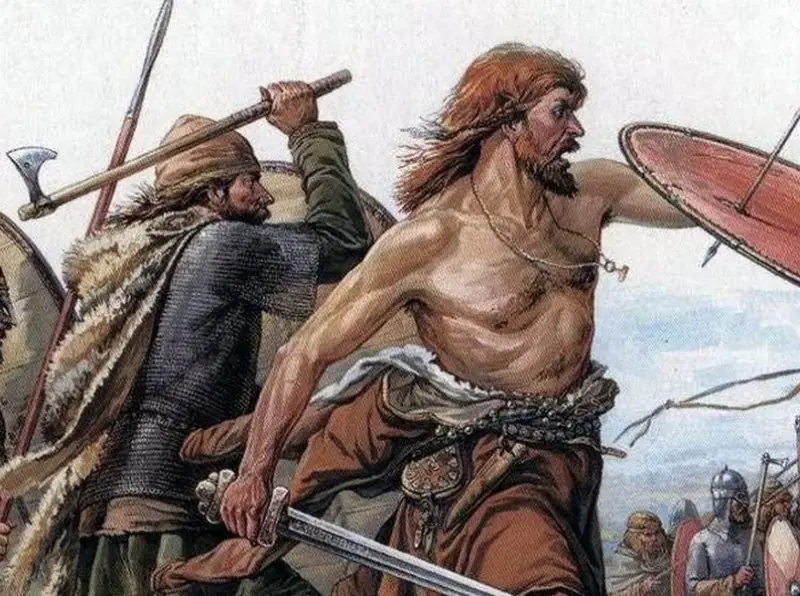
When you hear the word “barbarian,” what comes to mind? Savage warriors wielding crude weapons, rampaging through civilized cities? Perhaps grunting brutes in fur pelts, destroying everything in their path? Well, it’s time to toss that Hollywood image out the window. The real story of barbarians across the world is far more fascinating—and these so-called “savages” actually built the foundation of modern Europe.
The term itself tells quite a story. Ancient Greeks invented this word, and honestly, it’s basically ancient-world mockery. To Greek ears, anyone who didn’t speak their language just sounded like they were babbling “bar-var bar-var.” Pretty creative insult, right? By the 6th-5th centuries BC, Greek writers were already tossing this label around. The Romans, never ones to miss out on a good trend, borrowed it as “barbarus” and applied it to basically everyone except themselves and the Greeks.
Here’s where things get interesting: during the transition between medieval and modern times, “barbarian” took on new meaning. It came to describe those peoples who crashed Rome’s party—invading the empire and setting up their own kingdoms. Even the Arabs got dragged into this, though they put their own spin on it, calling North African non-Arabs “Berbers.” The word eventually spread across countless languages, always carrying that whiff of “foreign” and “incomprehensible culture.”

Who Really Were the Barbarians?
Scottish philosopher Adam Ferguson shook things up between 1723-1816 by introducing “barbarism” as a legitimate historical stage—sandwiched between savagery and civilization. But let’s be honest: most people today use “barbarism” when talking about vandalism or crude behavior, not academic historical periods.
The historical reality? Barbarians weren’t one specific people. They were everyone the Greeks and Romans found alien: Huns, Franks, Germans, Celts, Scythians, Mongols, and countless others. These nomadic tribes swept in from east, north, and south, transforming from wanderers into settlers right on Roman territory. They built cities—initially religious centers that evolved into bustling trading hubs.
Here’s a perspective historians rarely emphasize: barbarians essentially created new European kingdoms from within the dying empire’s carcass. Their society divided into freemen (warriors and farmers) and slaves, though even slaves received land plots in exchange for tribute to their lords. Interestingly, barbarian kings weren’t hereditary rulers—they were elected from among the most respected warriors. Imagine that: democracy among the “savages.”

Read More:
The Great Migration: How Barbarians Reshaped Europe
The “Great Migration” of barbarian tribes didn’t just happen—it systematically dismantled the Roman Empire. But Rome was already crumbling from within. Between 235-268 AD, Rome went through what historians call the “Crisis of the Third Century.” Picture this: 29 emperors in just 33 years, and only one died naturally. The rest? Assassinated.
Many of these short-lived emperors came from barbarian backgrounds themselves—ironic, right? Roman legions were packed with barbarian soldiers, often captured in wars and pressed into service. The political chaos wrecked stability in Rome’s most developed regions, making the empire ripe for takeover.
The Huns: Terror from the East
Around 373 AD, the Huns appeared at Rome’s borders—though they originally answered to a different name. These were the Xiongnu, a Mongol tribe China had defeated and pushed westward. As they migrated, their ranks swelled with Mongol, Turkic, and Ugric peoples. Think of them as a growing avalanche of warriors.
Their first major victory? Crushing the Ostrogoths, Germanic rulers who either fled to Rome for protection or started grabbing Roman territory themselves. The Huns didn’t just fight—they terrified. Roman writers described their appearance as almost inhuman, their warfare as lightning-fast and brutal.

Alaric: The Christian Barbarian Who Shocked the World
In 410 AD, something happened that echoed through history: Rome fell to barbarians. Alaric the Goth accomplished what seemed impossible, capturing the “eternal city” that hadn’t been successfully stormed in eight centuries.
But here’s the twist—Alaric was a devout Christian. Leader of the Visigoths (part of the Balti dynasty in modern northern France), he’d actually asked Rome nicely first. He wanted tribute and permission for his people to settle within the empire. When the Romans refused? Well, he took what he wanted.
During the two-day sack of Rome, Alaric ordered his warriors to spare churches and believers. His Christian faith tempered the destruction. He’d already ravaged Greece and Italy, earning his reputation as a plunderer—but history rarely mentions his religious devotion or political sophistication.

Attila: The Scourge of God
Meanwhile, Hunnic raids hammered Rome’s eastern frontiers. Emperor Theodosius II (401-450) eventually just started paying tribute—cheaper than fighting. Then came Attila.
Taking control in 434, Attila built an empire stretching from the Volga River to the Rhine. His name still means “total devastation” in our cultural memory. The Germans actually ranked him second only to Alexander the Great among history’s greatest rulers—quite the compliment from people he’d conquered.
Attila’s death at 49 (probably from plague) ended Hunnic expansion. His empire crumbled quickly, but the legend endured. What made him different? He wasn’t just destructive—he was politically savvy, extracting tribute from both Eastern and Western Roman Empires simultaneously.
Gaiseric: The Vandal King
Forty-five years after Alaric, Rome faced another barbarian—Gaiseric, king of the Vandals and Alans in North Africa. Learning about Rome’s latest power struggle, he marched in 455 and captured the city without a fight. His Vandals spent two full weeks systematically stripping Rome of wealth.
The term “vandalism” comes directly from this event—though Gaiseric likely saw himself as collecting legitimate spoils of war, not mindlessly destroying. His North African kingdom became a powerful Mediterranean force.

Theodoric the Great: Peace Through Marriage
Theodoric (453-526) took a different approach. This Ostrogothic king invaded Italy in 489 and within four years controlled the entire peninsula, Sicily, the Alps, and Dalmatia. He ruled from Ravenna until 526, but his real genius was diplomacy.
Through strategic marriages of his daughters, Theodoric secured peaceful relations with Vandals, Visigoths, Burgundians, and Franks. His kingdom stretched from the Danube to the Atlantic—built on alliances rather than constant warfare. Pretty sophisticated for a “barbarian,” right?
Clovis: The Frankish Pragmatist
Clovis ascended the Frankish throne at just 15. At that time, the Franks were basically loose tribal groupings with local chieftains. Clovis changed everything. He conquered Gaul (remnants of the Western Roman Empire) and pushed out the Germanic Thuringians.
Around 496, Clovis converted to Christianity—but here’s the fascinating part. Unlike Goths and Burgundians who’d chosen Arianism (a form of Christianity considered heretical by Rome), Clovis picked Orthodox Christianity. This won him massive support among the Gauls, his Roman subjects.
The Catholic Church never canonized him though. Why? Clovis approached religion pragmatically. Even as a baptized Christian, he systematically murdered all his relatives to eliminate rivals. The Merovingian dynasty he founded ruled the Franks for 250 years.

Odoacer: The Man Who Ended an Empire
September 476 AD marks the traditional date for Rome’s fall. That’s when Odoacer, a barbarian mercenary commander, forced young Emperor Romulus Augustus to abdicate. Odoacer declared himself King of Italy.
His background remains murky—possibly Sciri, Rugian, or Goth (all Germanic groups), maybe part Hun. With the Senate’s blessing, Odoacer shipped the imperial regalia—purple cloak and diamond diadem—to Constantinople. His message? Rome doesn’t need emperors anymore.
Under Odoacer, Italy enjoyed 13 peaceful years. He supported the Senate, reformed administration, and granted barbarian soldiers land with equal rights to Romans. Though an Arian Christian, he tolerated orthodox believers. The “barbarian” brought stability, not chaos.

Read More:
Beyond Europe: Barbarians Around the World
The barbarian concept wasn’t unique to Europe. Medieval Scandinavians—Vikings—were considered barbarians as they raided from North America to the Caspian Sea between the 7th-11th centuries. Their relatively small population limited expansion, plus their paganism made them unwelcome among Christianized European “barbarians.”
The 6th century introduced terms like “mixobarbarians” (Greek) and “semibarbarians” (Latin) for peoples mixing barbarian and Hellenic traits—Danube inhabitants, Bulgarians, Vlachs who spoke multiple languages.
Ancient Egypt called foreigners the “nine bows.” India and Japan long viewed Europeans as barbarians. Ancient China depicted barbarians as mythological monsters. Every civilization creates its “other”—its barbarians.

Why Barbarians Matter Today
Look closely at these stories—Alaric the Christian, Theodoric the diplomat, Clovis the pragmatist, Odoacer the reformer. These weren’t simple savages. They were ambitious leaders navigating a collapsing world, building something new from the ruins.
The barbarians didn’t just destroy Rome—they became Europe. Their kingdoms evolved into France, Germany, Italy, Spain. Their laws mixed with Roman traditions. Their warriors became medieval knights. Their conversions shaped Christian Europe.
So next time someone uses “barbarian” as an insult, consider: without these so-called savages, our world would look completely different. The barbarians aren’t just history’s villains—they’re our ancestors, our founders, ourselves.
What do you think—were the barbarians destroyers or builders? The evidence suggests they were both, and perhaps that’s exactly what makes them so fascinating.

Frequently Asked Questions About Barbarians
What does the word barbarian actually mean?
The term originated in Ancient Greece as an onomatopoeic mockery of non-Greek speakers—their language sounded like “bar-var bar-var” to Greek ears. It simply meant “foreigner who doesn’t speak our language.”
Were all barbarians nomadic?
Not at all. While many barbarian tribes like the Huns and Mongols were nomadic warriors, others like the Franks and Goths became sedentary peoples who founded cities and established kingdoms within former Roman territories.
Did barbarians have their own culture?
Absolutely. Barbarian societies had complex social structures with freemen (warriors and farmers) and slaves who received land plots. They elected kings from respected warriors rather than passing rule through heredity—a form of early democracy.

Why did the Roman Empire fall to barbarians?
The fall resulted from multiple factors: the Great Migration of barbarian tribes, Rome’s internal “Crisis of the Third Century” with 29 emperors in 33 years, and the empire’s reliance on barbarian soldiers who eventually turned against it.
Were barbarians really savage and uncivilized?
Historical evidence suggests otherwise. Leaders like Alaric (a Christian), Theodoric (a diplomatic strategist), and Odoacer (a reformer) demonstrated sophistication. They built kingdoms, created laws, and preserved Roman elements while adding their own traditions.