
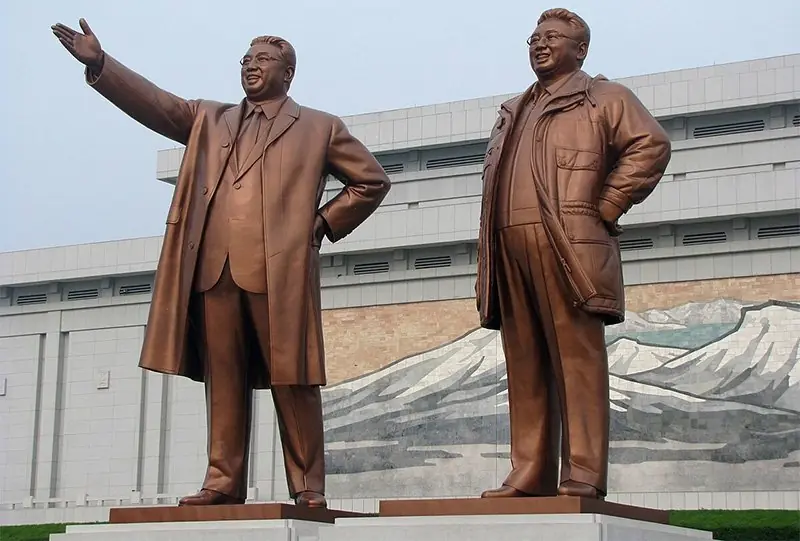
Why do some governments concentrate power in the hands of a few leaders while still maintaining the appearance of democracy? The concept of authoritarianism helps explain this political phenomenon.
Authoritarianism refers to a political system in which power is centralized in a small group or a single leader, while political freedoms and public participation remain limited. Unlike totalitarian systems that attempt to control every aspect of life, authoritarian regimes typically allow limited social and economic freedom but restrict political competition.
📖 In This Article:
- What Is Authoritarianism?
- Key Characteristics of Authoritarian Regimes
- Authoritarianism vs Totalitarianism
- Types of Authoritarian Governments
- Examples of Authoritarian Regimes
- Political Thinkers Behind Authoritarian Theory
- Modern Authoritarianism and Hybrid Regimes
- Frequently Asked Questions
What Is Authoritarianism?
The term authoritarianism emerged in the 19th century and literally means “rule by authority.” In political science, authoritarian regimes are often considered a middle ground between liberal democracy and extreme totalitarian dictatorship.
In such systems, political power is typically held by a small elite group, a ruling party, or a powerful leader who governs for long periods of time. Citizens may retain some personal freedoms, but their influence over political decisions is minimal.
For a broader overview of political systems, see the definition of authoritarianism on Wikipedia.

Key Characteristics of Authoritarian Regimes
Although authoritarian governments differ from country to country, they tend to share several common features:
- Concentration of power in the hands of a single leader or ruling party
- Reliance on military and police forces to suppress opposition
- Limited political competition and weak or controlled opposition
- Manipulated elections designed to legitimize those in power
- Government propaganda promoting official ideology
Authoritarian governments often maintain the outward structure of democracy—such as elections, parliaments, or multiple parties—but these institutions typically have little real influence.
Authoritarianism vs Totalitarianism
Authoritarianism is frequently confused with totalitarianism, but the two systems are not identical.
In authoritarian states, governments focus mainly on controlling political power. Citizens may still have limited autonomy in areas such as business, culture, or religion.
Totalitarian regimes, by contrast, attempt to control nearly every aspect of society, including ideology, private life, education, and the economy.
This distinction explains why authoritarian governments can survive for decades without constant repression—many citizens simply avoid political involvement while pursuing their personal lives.
Types of Authoritarian Governments
Modern political science often distinguishes several types of authoritarian regimes.
- Absolute or constitutional monarchies – power concentrated in a monarch
- Oligarchic regimes – political power held by a small elite group
- Class-based authoritarian systems dominated by powerful economic or technocratic elites
- Socialist authoritarian regimes with centralized party control
- Military dictatorships led by armed forces or military juntas
- Theocratic authoritarian regimes where religious leaders control political power
These forms differ in ideology and structure but share the same fundamental principle: centralized authority and limited democratic participation.
Read More:
Examples of Authoritarian Regimes
Many countries throughout history have been governed by authoritarian systems. Contemporary examples frequently cited by political analysts include:
- China
- Iran
- Vietnam
- Cuba
- Venezuela
- Laos
Historically, authoritarian regimes have also appeared in military juntas across Africa and in governments with strong centralized leadership in the Middle East.
According to the Economist Intelligence Unit Democracy Index, dozens of countries around the world still fall into the category of authoritarian regimes.
Political Thinkers Behind Authoritarian Theory
The intellectual foundations of authoritarianism can be traced to several influential thinkers.
The English philosopher Thomas Hobbes (1588–1679) argued that strong centralized authority was necessary to prevent social chaos and protect society from anarchy. In his famous work Leviathan, Hobbes described the need for a powerful state capable of maintaining order.
Another key figure was Juan Donoso Cortés (1809–1853), a Spanish political thinker who defended conservative rule and criticized liberal democracy. He believed that a powerful centralized government—whether led by a monarch or president—was essential for political stability.

Modern Authoritarianism and Hybrid Regimes
In the 21st century, many authoritarian governments have adopted what political scientists call “competitive authoritarianism.”
This hybrid model combines formal democratic institutions with authoritarian control. Elections still take place, but opposition parties face severe disadvantages, including restricted media access and political pressure.
Governments may also influence election outcomes through manipulation of administrative resources, restrictions on political competition, or control of information.
Despite these limitations, such regimes often maintain a democratic appearance in order to gain international legitimacy and avoid criticism.
Read More:

Frequently Asked Questions About Authoritarianism
What is authoritarianism?
Authoritarianism is a political system in which power is concentrated in the hands of a single leader or small ruling group. Political opposition is restricted, and citizens have limited influence over government decisions.
How does authoritarianism differ from democracy?
In a democracy, citizens choose leaders through competitive elections and enjoy broad civil liberties. Authoritarian systems limit political competition, control elections, and restrict public participation in government.
Is authoritarianism the same as dictatorship?
Not always. While dictatorships are a type of authoritarian rule, some authoritarian systems include limited institutions such as parliaments or political parties, even though real power remains concentrated.
Can authoritarian regimes hold elections?
Yes. Many authoritarian governments hold elections to create a democratic appearance. However, these elections often lack fair competition due to media control, legal restrictions, or manipulation.

How many authoritarian regimes exist today?
According to global democracy indexes, dozens of countries are classified as authoritarian regimes, where political freedoms are heavily restricted and ruling parties maintain long-term control.
Can authoritarian systems become democratic?
Yes. Under certain social and political conditions, authoritarian regimes may transition toward democracy through reforms, public pressure, or political change.
Conclusion: Authoritarianism represents a political system that balances centralized authority with limited social autonomy. While less extreme than totalitarian regimes, it still restricts political freedom and democratic participation, shaping governance in many parts of the world today.