
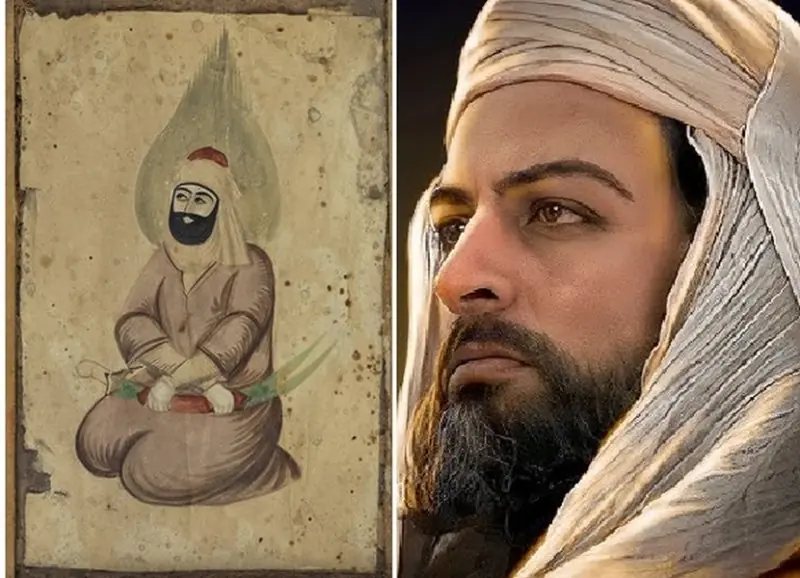
What happens when a man is simultaneously revered as a saint by hundreds of millions and condemned as a usurper by hundreds of millions more? Ali ibn Abu Talib occupies this impossible position in Islamic history. Born in the Kaaba itself—the holiest site in Islam—raised by the Prophet Muhammad, married to his daughter, and chosen by him as successor, Ali seemed destined for unchallenged leadership. Instead, his caliphate triggered Islam’s greatest schism, a division between Sunni and Shiite Muslims that persists fourteen centuries later and continues shaping Middle Eastern politics today.
Who Was Ali ibn Abu Talib? The Prophet’s Shadow
Picture a ten-year-old boy in seventh-century Mecca, the first child to accept Islam after Muhammad’s initial revelation. This was Ali—unique among early Muslims for being born into the Prophet’s own extended family, the Banu Hashim. His father, Abu Talib, was Muhammad’s uncle and protector during the dangerous early years of preaching. When Abu Talib fell into poverty, young Ali moved into Muhammad’s household, becoming both adopted son and future son-in-law.
The stories surrounding Ali’s birth sound legendary, yet millions believe them absolutely. According to tradition, his mother Fatima bint Asad was praying at the Kaaba when labor began. The walls of the ancient shrine miraculously opened, allowing her to enter. Ali was born inside the black-draped cube that Abraham and Ishmael built—a distinction claimed by no other human being.
Whether miraculous or mundane, Ali’s upbringing was extraordinary. He slept in the Prophet’s chamber, learned Islam at its source, and developed a reputation for both physical courage and intellectual brilliance. “I am the city of knowledge,” Muhammad reportedly said, “and Ali is its gate.” This saying, recorded in both Sunni and Shiite sources, hints at the unique bond between the two men—a bond that would have world-historical consequences.
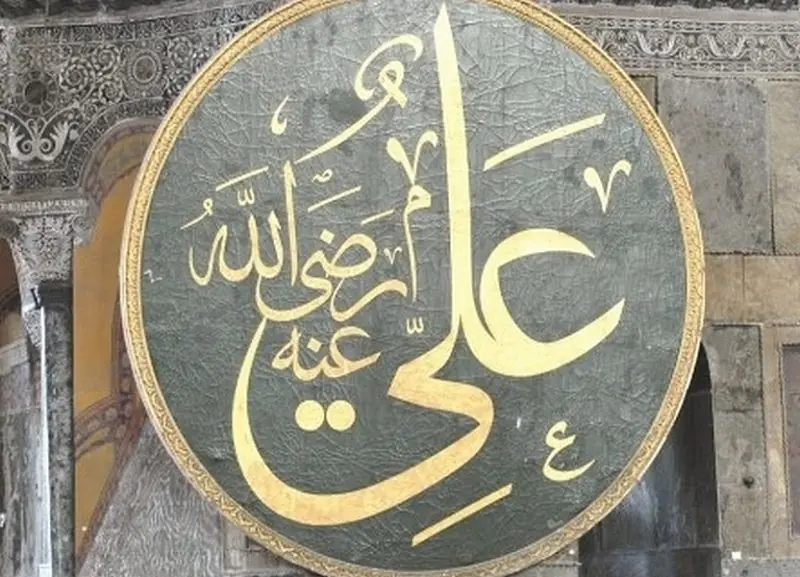
The Succession Crisis: How Ali Lost the Caliphate
Muhammad’s death in 632 AD created an immediate crisis. Who should lead the Muslim community? The Prophet left no clear instructions—or did he? Shiites point to the event at Ghadir Khumm in March 632, during Muhammad’s final pilgrimage. Stopping between Mecca and Medina, he took Ali by the hand and declared: “Whomever I am the master of, Ali is his master.”
Sunnis interpret this as a simple statement of friendship. Shiites see it as explicit designation of succession. The debate has never been resolved. What happened next, however, is historical fact: the Muslim community chose Abu Bakr, Muhammad’s father-in-law and close companion, as the first caliph. Ali, reportedly still mourning the Prophet and preparing his body for burial, was passed over.
For twenty-four years, Ali watched others rule. Abu Bakr, then Umar, then Uthman—each chosen through various consultation methods while Ali remained politically sidelined. He served as advisor, judge, and military commander, but never as caliph. His patience was remarkable; his frustration, perhaps, understandable.
When a rebellion against Uthman’s policies turned into assassination in 656 AD, Ali finally had his chance. The Muslim community, fractured and fearful, turned to the Prophet’s cousin and son-in-law. At last, Ali ibn Abu Talib became the fourth Rightly Guided Caliph.

Read More:
The Caliphate of Ali: Four Years of Civil War
Ali’s reign began with blood and ended with blood—his own. The caliph who preached unity presided over Islam’s first civil wars, the fitnas that shattered the community’s political unity forever.
The first challenge came immediately. Aisha, Muhammad’s youngest widow, allied with two prominent companions—Talha and az-Zubayr—demanding punishment for Uthman’s killers. They raised an army and seized Basra, executing thousands suspected of involvement in the previous caliph’s murder. Ali marched to meet them, hoping for negotiation. Instead, he got the Battle of the Camel—named for the litter carrying Aisha around which the fighting raged.
The casualties were devastating: Talha and az-Zubayr killed, Aisha captured and sent back to Medina in disgrace, and the Prophet’s widow forever associated with armed rebellion against his chosen successor. “She is the wife of your Prophet,” Ali reportedly told his soldiers before battle, reminding them of the terrible irony of Muslims fighting Muhammad’s own family.
But the worst was yet to come. Mu’awiya ibn Abi Sufyan, Uthman’s cousin and governor of Syria, refused to recognize Ali’s authority. At the Battle of Siffin in 657, their armies faced each other for months. When Ali seemed on the verge of victory, Mu’awiya’s troops raised Qurans on their spears, calling for arbitration. Ali, against his better judgment, accepted.
The arbitration was a disaster. It weakened Ali’s position, alienated his most zealous supporters, and solved nothing. A group of these disillusioned followers—the Kharijites—declared both Ali and Mu’awiya illegitimate. “Judgment belongs to God alone,” they proclaimed, rejecting any human arbitration. One of them, Abdurrahman ibn Muljam, would soon make this slogan deadly.
The Assassination: Martyrdom in Kufa
January 661. Ali ibn Abu Talib, now sixty-three, entered the Great Mosque of Kufa for morning prayers. Ibn Muljam, waiting in ambush, struck him with a poisoned sword across the forehead. The wound was mortal; the poison, incurable.
For three days, Ali lingered. He instructed his sons Hasan and Husayn not to pursue revenge, lest the cycle of violence continue. He designated Hasan as his successor—though the young man would abdicate to Mu’awiya within months, accepting a pension and retirement in exchange for peace.
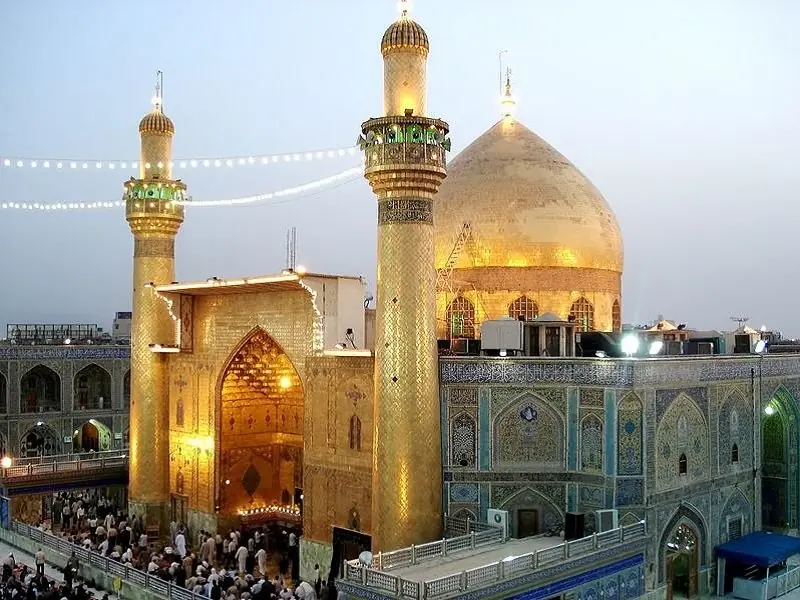
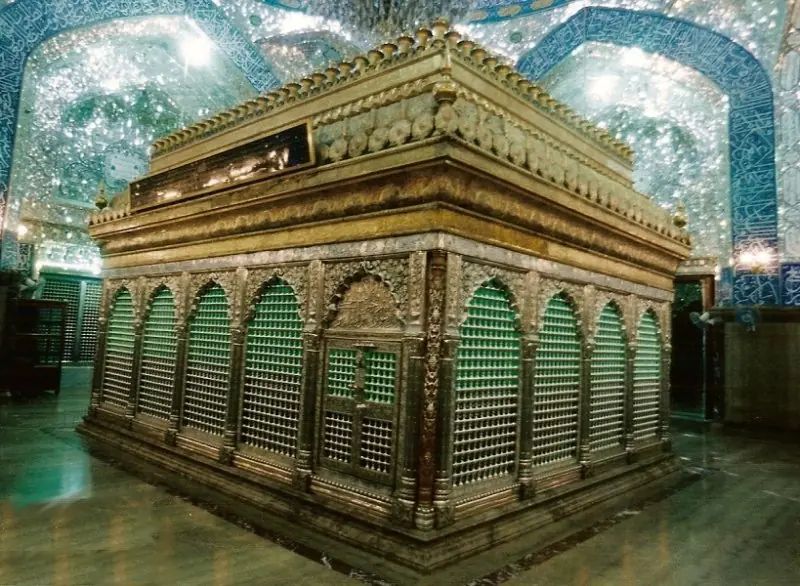
Ali’s burial was secret. Fearful that enemies would desecrate the grave, his followers interred him at night in an unmarked location near Najaf. Only decades later, under the Abbasid Caliph Harun al-Rashid, was the tomb discovered and a shrine built. Today, the Imam Ali Mosque in Najaf, Iraq, is one of Shiite Islam’s holiest sites, drawing millions of pilgrims annually.
Mu’awiya, meanwhile, established the Umayyad Caliphate in Damascus, making the office hereditary—something Ali had refused to do. When Mu’awiya’s son Yazid succeeded him in 680, Ali’s son Husayn refused to pledge allegiance. The result was Karbala, where Husayn and his small band were massacred, cementing the Sunni-Shiite divide into permanent religious schism.
Ali’s Legacy: Model Ruler or Tragic Failure?
Historians still debate Ali’s caliphate. Was he an idealistic ruler ahead of his time, or a political naif who squandered his legitimacy through military indecision? The evidence supports both readings.
His governance was remarkably progressive. The caliphate under Ali established social security systems—zakat funds supporting the poor, elderly, widows, and disabled. State granaries protected against famine. Judges were chosen for integrity rather than connections, and forbidden from commercial activities that might encourage corruption. The army, numbering perhaps 100,000, was professional and disciplined.
Yet Ali could not control his own supporters, let alone his enemies. Five major rebellions erupted during his brief reign, each involving tens of thousands of Muslims. The arbitration at Siffin was a strategic catastrophe. By the time of his assassination, his authority barely extended beyond Iraq.
“He was the most knowledgeable of men,” one early historian wrote, “but knowledge did not save him from the sword.” This tension—between spiritual authority and political power—defines Ali’s historical significance.
Read More:
Shiite Islam: The Religion of Ali
For Shiites, Ali is not merely the fourth caliph but the first Imam—the divinely appointed successor to Muhammad’s spiritual and temporal authority. The Ghadir Khumm statement becomes explicit designation; Ali’s exclusion from the first three caliphates, a historical injustice; his assassination, martyrdom.
The line of Imams continues through Ali’s sons: Hasan, the second Imam, who abdicated and died by poisoning (possibly by the Umayyads); and Husayn, the third Imam, whose martyrdom at Karbala defines Shiite identity. The remaining nine Imams descend from Husayn, creating a genealogy of suffering and resistance that Shiites commemorate with annual passion plays and rituals.
This “Alid” lineage—descendants of Ali and Fatima—became the legitimizing principle for numerous Islamic dynasties. The Fatimids of Egypt (909-1171) claimed direct descent and ruled a vast North African and Middle Eastern empire. The Idrisids of Morocco, the Alavids of Iran, and numerous local rulers across the Islamic world used Ali’s bloodline to justify their authority.
Modern Iran, the largest Shiite country, embodies this legacy. The Army Officers’ University bears Ali’s name; Tehran hosts an Imam Ali Museum; a thirteen-volume encyclopedia dedicated to his life was published in 2013. The city of Hyderabad in India derives its name from one of Ali’s titles, “Haydar” (Lion). From Azerbaijan to Hamburg, mosques honor his memory.
Conclusion: The Man Who Was Too Good for His Times?
Ali ibn Abu Talib remains Islam’s most controversial founding figure—loved by some as the perfect human after the prophets, viewed by others as a well-meaning but ineffective ruler whose ambitions fractured the Muslim community. The truth, as always, lies somewhere between these poles.
He was undoubtedly courageous, learned, and pious. His letters and sermons—collected in the Nahj al-Balagha, a sacred text for Shiites and respected work for Sunnis—reveal a mind of subtlety and depth. His treatment of defeated enemies, including Aisha, showed mercy rare in civil wars. His refusal to make the caliphate hereditary, contrasted with Mu’awiya’s establishment of the Umayyad dynasty, suggests genuine commitment to consultative governance.
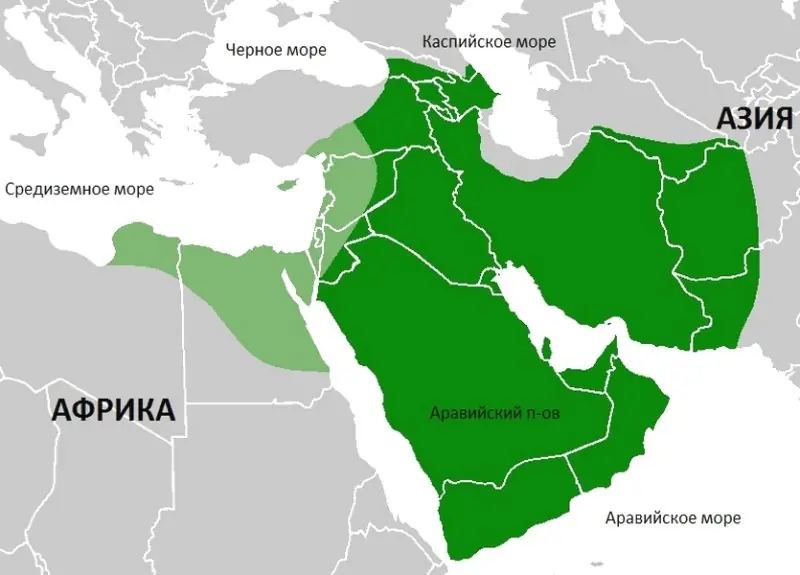
Yet his caliphate was a failure by any political metric. The Muslim community divided permanently on his watch. The gates of ijtihad—interpretive reasoning—gradually closed among Sunnis, partly in reaction to the chaos of his era. The Islamic empire, which had expanded explosively under the first three caliphs, stagnated and then shrank.
Perhaps Ali was simply too good for the political world he inhabited—too committed to principle, too reluctant to compromise, too trusting in the face of betrayal. His life reads like a tragedy: the chosen successor passed over, the reluctant ruler thrust into power, the peacemaker consumed by war, the martyr whose death solved nothing.
Read More:
Could Ali have prevented the Sunni-Shiite split? Probably not—the social and political forces were too powerful. But his life and death gave that split its permanent form, its emotional core, its annual commemorations of grief and guilt. Fourteen centuries later, Muslims still live with the consequences of the choices made in those terrible years when the Prophet’s family fought the Prophet’s companions, and Islam’s unity was lost forever.