
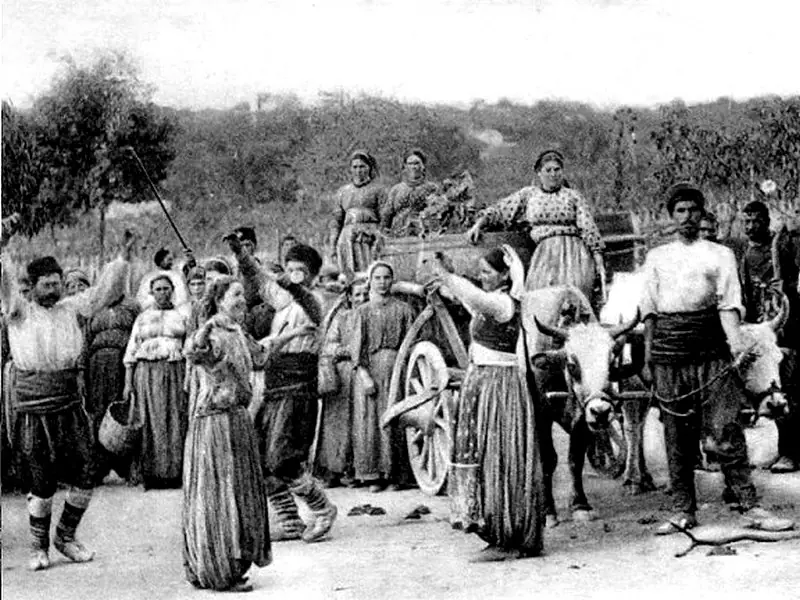
The Gagauz people are one of the world’s most quietly remarkable ethnic groups. Turkic in language, Orthodox in faith, and Balkan in culture — they exist at a crossroads of civilizations that few peoples in history have occupied. So who exactly are the Gagauz? Where did they come from, and what keeps their identity alive today?
This guide covers it all: their documented history, ethnic origins, geographic spread across multiple continents, living cultural traditions, and their current status as an autonomous people within the Republic of Moldova.
📖 In This Article:
- Who Are the Gagauz?
- Where Do the Gagauz Live Today?
- History: From Bessarabia to Autonomy
- Ethnic Origins of the Gagauz
- Language and Religion
- Cultural Traditions and Festivals
- Traditional Gagauz Cuisine
- Gagauzia Today
- Frequently Asked Questions
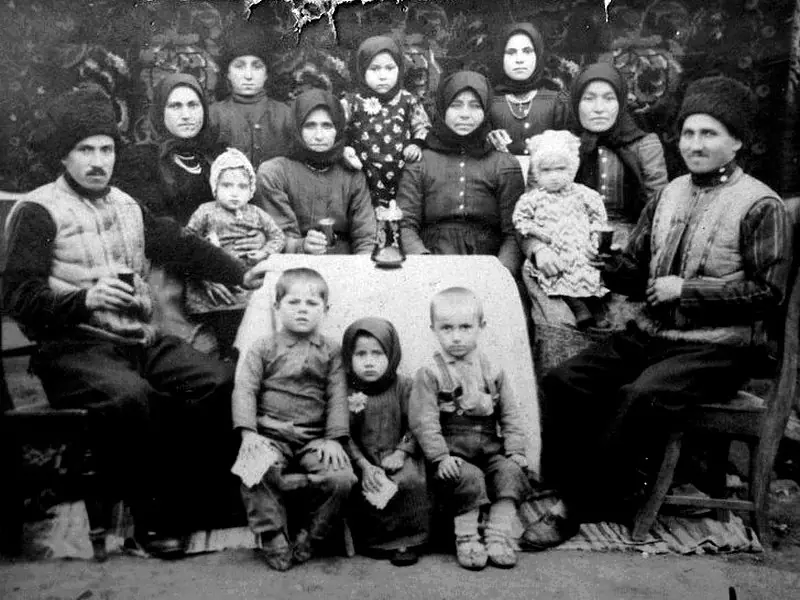
Who Are the Gagauz People?
The Gagauz are a Turkic-speaking ethnic group who practice Eastern Orthodox Christianity — a pairing that immediately sets them apart from virtually every other Turkic people on earth. Their language belongs to the Oghuz branch of Turkic languages, closely related to Turkish and Azerbaijani. Yet their spiritual life, ritual calendar, and cultural identity are rooted firmly in the Orthodox tradition.
The first formal written reference to the Gagauz as a distinct people comes from 1837 — specifically, from the “Statistical Review of the Colonies of the Bessarabian Region.” By that time, the majority of the Gagauz had already been living in the steppes of southern Bessarabia for decades, having settled between the Dniester and Danube rivers after Russia’s annexation of the region in 1812.
Today, the worldwide Gagauz population stands at roughly 250,000 people — small in number, but extraordinary in cultural depth.
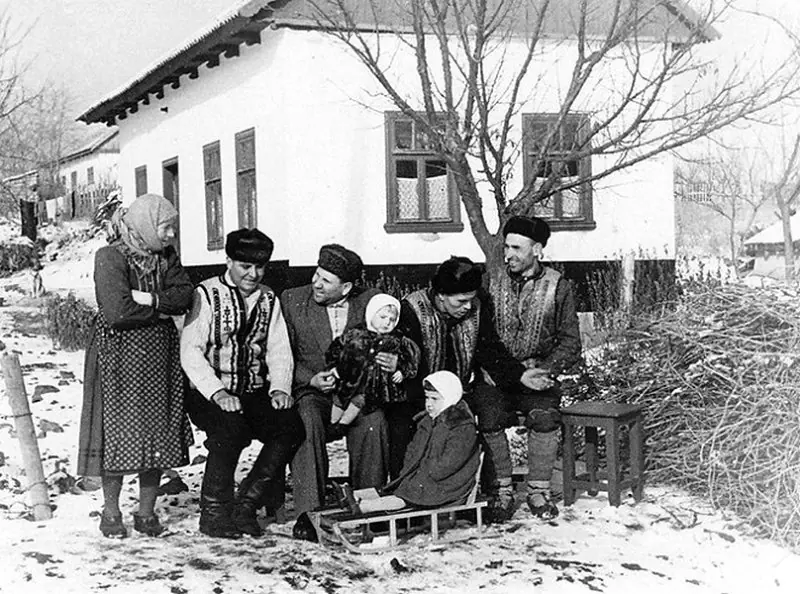
Where Do the Gagauz Live Today?
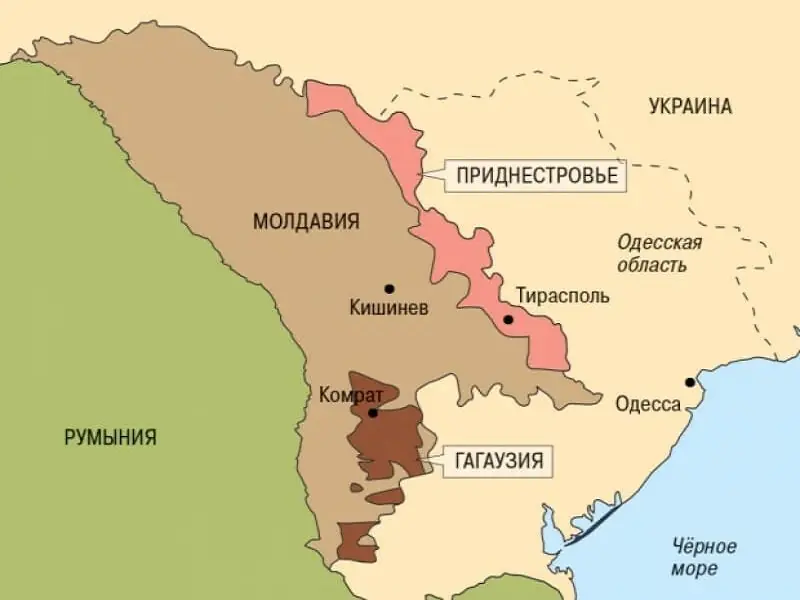
The heart of the Gagauz world is the Republic of Moldova, where approximately 147,000 Gagauz reside — primarily within the Autonomous Territorial Unit of Gagauzia (also known as Gagauz Yeri). Another 27,000 live in the Odessa region of Ukraine, and around 15,000 have settled in Russia’s Kabardino-Balkaria, concentrated in the Prokhladny district.
Beyond the former Soviet space, Gagauz diaspora communities are found in Turkey, Greece, Romania, Bulgaria, the United States, Canada, and Brazil. The Gagauz are genuinely a global people — just not a widely recognized one.
The capital of Gagauzia is Comrat, founded in 1789 and situated in the Budzhak steppe along the Ialpuh River. It’s a modest city by most standards, but for the Gagauz people, it carries the weight of centuries.
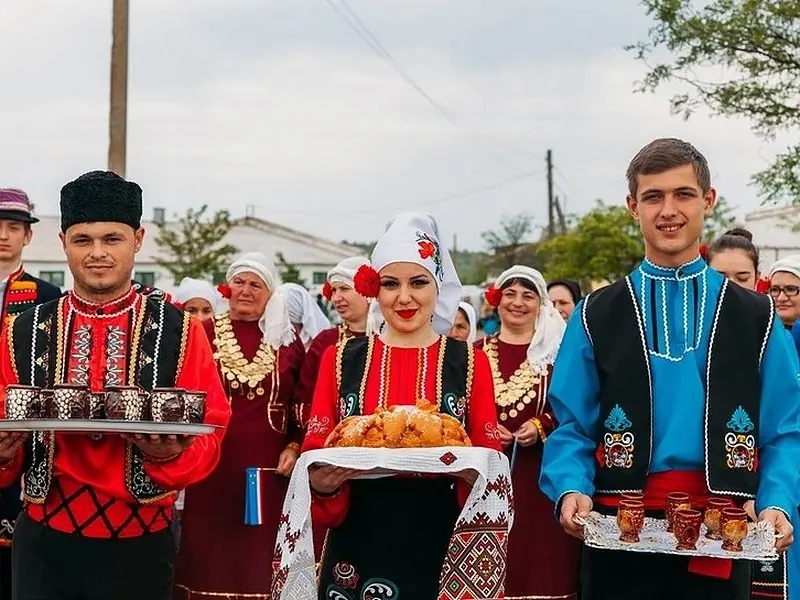
The History of the Gagauz: From Bessarabia to Autonomy
Early Political History (1812–1940)
After the Russian Empire absorbed Bessarabia in 1812, the Gagauz consolidated their settlements in the region’s southern steppes. Their political status shifted more than once over the following century. From 1856 to 1878, they lived under Moldovan-Romanian administration. Between 1918 and 1940, the territory of present-day Gagauzia formed part of the Kingdom of Romania. The post-war decades brought incorporation into the Moldavian Soviet Socialist Republic.
The Comrat Republic — A State That Lasted Six Days
Here’s a piece of history that deserves far more attention than it gets. In January 1906, during the turbulence of the Russian Revolution, a peasant uprising in the Comrat Volost led to the declaration of the Comrat Republic — what many consider the first Gagauz state. It survived exactly six days before tsarist forces suppressed it. The uprising’s instigators were sent to hard labor in Siberia.
The revolutionary year of 1917 brought renewed hope. In December, the Chisinau Council debated the creation of a Gagauz-Budzhak Republic. That proposal, too, was ultimately set aside.
The Road to Autonomy in Modern Moldova
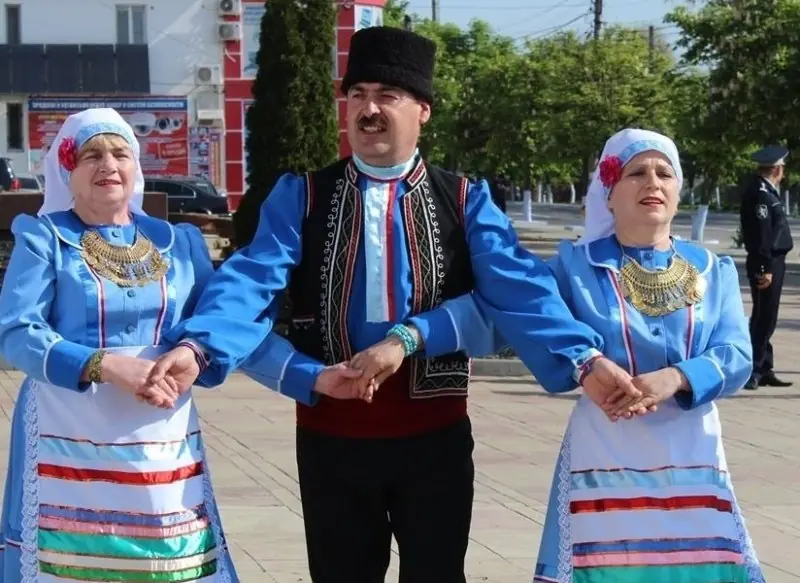
In August 1990, with the Soviet Union visibly crumbling, the Gagauz declared the establishment of the Gagauz Republic in Comrat. Moldova’s government annulled the declaration almost immediately and organized the so-called “March on Gagauzia” — a column of Moldovan nationalists, accompanied by police, marching toward Gagauz-populated towns. Volunteers from Transnistria arrived to support the Gagauz. Only a negotiated withdrawal on both sides prevented the situation from escalating further.
The resolution came four years later. In December 1994, the Moldovan Parliament passed a law granting Gagauzia a special legal status. The Autonomous Territorial Unit of Gagauzia was formally established, encompassing three towns and 27 villages. It has its own flag, coat of arms, anthem, and a head of government — the Bashkan — who sits as a member of the Moldovan cabinet.
Learn more about Gagauzia’s political structure on Wikipedia for a deeper dive into its autonomous institutions.
Read More:
The Ethnic Origins of the Gagauz People
The ancestral roots of the Gagauz remain a lively subject among historians and anthropologists. No single theory has won universal acceptance — and that’s part of what makes the question so interesting.
- The Oghuz-Pecheneg-Cuman theory — The most widely held view: the Gagauz descended from nomadic Turkic tribes (Oghuz, Pechenegs, and Cumans) who migrated into the Balkans through the Northern Black Sea region.
- The Seljuk theory — Popular in Turkey, this hypothesis links the Gagauz to the Seljuk Turks who founded a state in the northern Balkans during the 13th century.
- The Bulgar Turk theory — A third school of thought traces the Gagauz to Bulgar Turks who moved from the Volga to the Balkans in the 7th century and converted to Christianity by the 9th century.
One historically striking data point: Ottoman records from 1597 indicate that Christian Turks — identified with the Gagauz — constituted the majority of the population in what is now Bulgaria. Varna was, at that time, considered a Gagauz city. Even after the majority migrated to the Russian Empire, roughly 10,000 Gagauz remained in Varna.
Linguistically, the Gagauz serve as a rare bridge: connecting the “southern” Turks of Anatolia and the South Caucasus with the “northern” Turks of the Black Sea region and the Volga. Related peoples include the Crimean Tatars, Nogays, and Lithuanian Tatars — all descendants of Turkic Oghuz and Kipchak tribes of the Western Desht-i-Kipchak.
The Gagauz Language and Religion
The Gagauz language belongs to the Oghuz (southwestern) branch of the Turkic language family — the same branch as Turkish and Azerbaijani. It’s mutually intelligible with Turkish to a significant degree, yet carries distinct phonological and lexical features shaped by centuries of Balkan and Slavic influence.
In Gagauzia, Gagauz is an official language alongside Russian and Moldovan — though in daily life, Russian functions as the primary language of communication. During the Soviet era, a Cyrillic-based alphabet was developed, enabling publication of dictionaries, school textbooks, newspapers, and literary works. Gagauz-language media continue to expand their audience each year.
As for religion — the Gagauz are Orthodox Christians. Before settling in Bessarabia, they were affiliated with the Bulgarian and Greek Orthodox Churches. After resettlement, they joined the Russian Orthodox Church. A small minority identifies with Baptist or Evangelical Christianity. This Orthodox identity is not merely nominal; it permeates Gagauz ritual life, festivals, and family customs in ways that are deeply felt.
For a broader overview, check the Encyclopaedia Britannica entry on the Gagauz people for additional historical context.
Gagauz Cultural Traditions and Festivals
The Wolf Festival — Dzhanavar Yortulari
Of all Gagauz traditions, the Wolf Festival — Dzhanavar Yortulari — is perhaps the most vivid window into this people’s ancient soul. Held in mid-November, it opens the winter ritual cycle and reflects a sacred reverence for the wolf that stretches back to pre-Christian nomadic life. The wolf’s significance is so enduring that when Gagauzia adopted its flag in 1990, the emblem chosen was a wolf’s head.
The festival lasted a full week. As livestock moved into winter stalls in November, wolves naturally drew closer to villages in search of food. To protect their herds — and themselves — the Gagauz observed a strict set of customs:
- No knitting or sewing of woolen garments
- No use of knives or sharp tools
- Women smeared oven doors with clay, symbolically sealing the wolf’s eyes, ears, and mouth
- Flatbreads with holes — representing wolf bite marks — were baked as ritual offerings
It’s a festival that manages to be both practical and deeply symbolic at the same time.
St. Andrew’s Eve, St. Nicholas Day, and Midwinter Customs
On the eve of St. Andrew’s Day (December 13), the Gagauz smear doorframes with garlic and rub their hands and faces with fragrant spices — a blend of Orthodox Christian practice and far older apotropaic ritual aimed at repelling evil spirits.
St. Nicholas Day — celebrated as New Year’s Day in the Gagauz calendar — is an unmistakably masculine holiday: loud feasts, obligatory fish dishes, and a tradition where men dress in women’s clothing, cover themselves in soot, and visit neighbors’ homes on the eve of December 19. The belief? That this ritual inversion of identity brings good fortune for the year ahead. It’s strange, joyful, and entirely their own.
Traditional Gagauz Cuisine
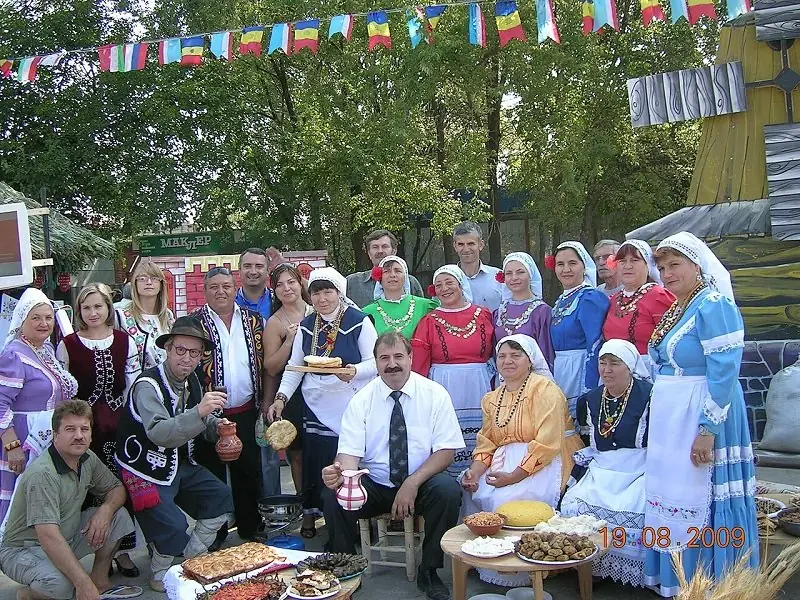
Gagauz food is essentially a culinary autobiography — every dish tells the story of a people shaped by nomadic steppe life and Balkan settlement. The cuisine prizes durability, richness, and flavor in equal measure.
Traditional Gagauz dishes include:
- Pita — unleavened flatbread, the daily staple
- Kyyrma — layered pies filled with cottage cheese and feta
- Kaurma — animal stomachs stuffed with seasoned lamb and spices
- Pacha — jellied meat, a festive centerpiece
- Kurban — wheat porridge prepared during ritual sacrifices
- Yuurt — traditional yogurt made from boiled milk and sour cream
One particularly revealing aspect of Gagauz culinary culture is their mastery of long-term food preservation. Milk, meat, cottage cheese, and feta are stored in animal skins or hollow pumpkin vessels called susaks — a technique inherited directly from nomadic ancestors who couldn’t afford to waste a single resource.
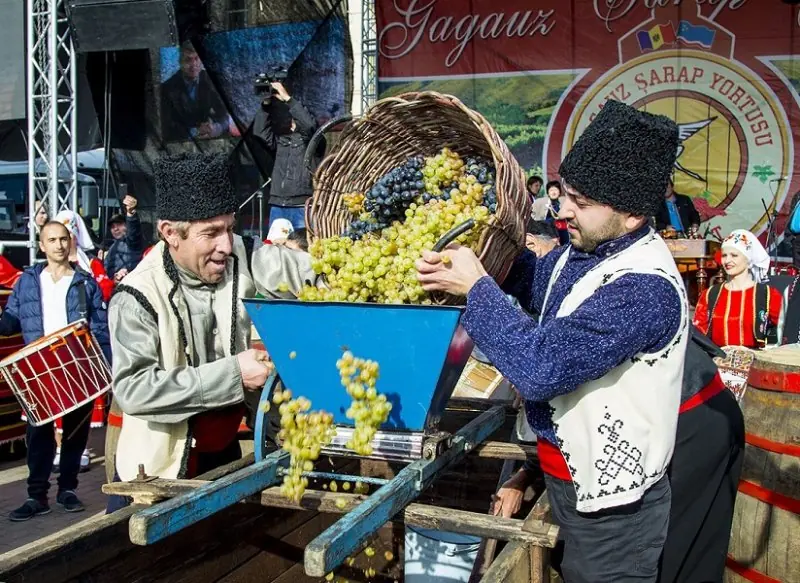
And the drink of choice? Red wine — hardly surprising for a people whose men have been cultivating vineyards for generations.
The Gagauz Today — A Unique Position in the World
The Gagauz occupy a cultural and geopolitical position that is genuinely one of a kind. They are Turkic but Christian. They are part of Moldova but autonomous. They are a small people — 250,000 worldwide — who nonetheless maintain their own language, government institutions, flag, anthem, and national cultural life.
Since 2006, a Gagauz Congress has convened every three years in Comrat. Modeled on the Kurultai gatherings of other Turkic nations, it brings together Gagauz from across the globe to address political, cultural, and identity-related issues facing their community. It’s a gathering that feels both ancient in spirit and urgently modern in purpose.
It’s also worth noting that Muslim Gagauz — known as Gadjals — live in Turkey, Bulgaria, and Greece. Their existence adds yet another layer to an already complex and fascinating identity. The Gagauz story, it turns out, is not one story at all — it’s many, woven together across centuries and continents.
Read More:
Frequently Asked Questions About the Gagauz People
What language do the Gagauz speak?
The Gagauz speak the Gagauz language, a Turkic language from the Oghuz branch — the same linguistic family as Turkish and Azerbaijani. It is one of three official languages in the Autonomous Territorial Unit of Gagauzia, alongside Russian and Moldovan. The language uses a Cyrillic-based alphabet in the region, though it’s closely related to Turkish.
What religion are the Gagauz?
The Gagauz are Eastern Orthodox Christians — a distinction that sets them apart from most other Turkic-speaking peoples in the world, the majority of whom are Muslim. A small minority practices Baptist or Evangelical Christianity. Their Orthodox faith deeply influences their festivals, rituals, and family traditions.
Where is Gagauzia located?
Gagauzia is an autonomous territorial unit in the south of the Republic of Moldova. It consists of three towns and 27 villages, with Comrat as the capital. The region sits in the Budzhak steppe, historically part of the Bessarabia region between the Dniester and Danube rivers.
How many Gagauz people are there in the world?
The global Gagauz population is estimated at approximately 250,000 people. The largest community — around 147,000 — lives in Moldova. Significant communities also exist in Ukraine (27,000), Russia (15,000), and across Turkey, Greece, Romania, Bulgaria, North America, and Brazil.
When did Gagauzia become an autonomous region?
Gagauzia officially became an autonomous territorial unit in December 1994, when the Parliament of the Republic of Moldova passed a law granting it special legal status. The region has its own flag, coat of arms, anthem, and elected head of government known as the Bashkan, who serves in Moldova’s cabinet.
What is the Wolf Festival in Gagauz culture?
The Wolf Festival (Dzhanavar Yortulari) is a mid-November Gagauz tradition reflecting ancient reverence for wolves. During this week-long festival, Gagauz people avoid sewing wool, using knives, and bake ritual flatbreads with holes. Women smear oven doors with clay to symbolically seal wolves’ senses—protecting livestock during winter.
Are the Gagauz related to Turks?
Yes, linguistically the Gagauz are closely related to Turks through the Oghuz branch of Turkic languages. Their language is mutually intelligible with Turkish to a significant degree. However, their Eastern Orthodox Christian faith distinguishes them from most Turkic groups, who predominantly practice Islam.
What is the Comrat Republic?
The Comrat Republic was a short-lived Gagauz state declared in January 1906 during the Russian Revolution. It existed for only six days before tsarist forces suppressed it, sending its leaders to Siberian hard labor. Many historians consider it the first modern Gagauz political entity.