
How Temujin united nomadic tribes to create history’s largest contiguous empire—and why the Mongol superstate collapsed within 162 years
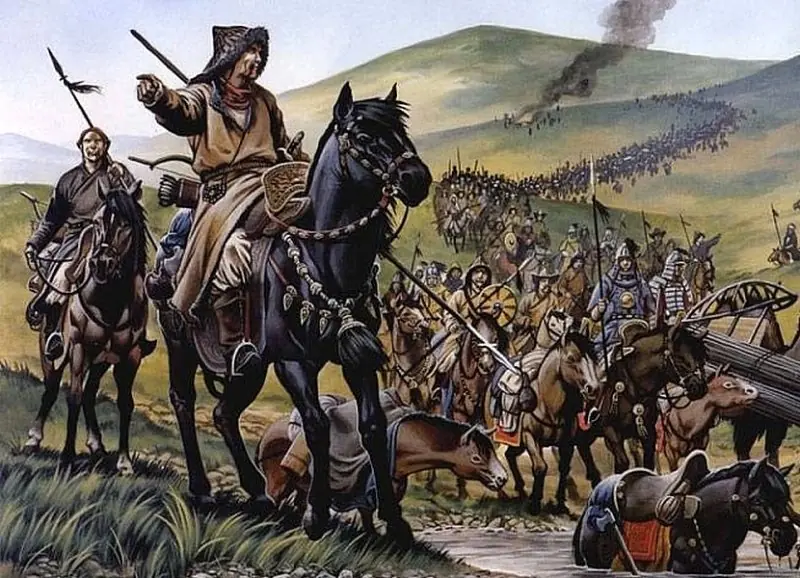
Imagine standing on the Mongolian steppe in March 1206. Thousands of warriors from disparate tribes gather at the source of the Onon River for a kurultai—a grand assembly that would reshape world history. Before them stands a 44-year-old man named Temujin, who had spent decades fighting rivals, surviving betrayal, and forging alliances. On this day, the assembled chieftains proclaim him Genghis Khan—”Universal Ruler”—and declare the birth of the Mongol Empire. None present could foresee that this nomadic confederation would conquer territory five times larger than the Roman Empire, stretching from the Pacific Ocean to Eastern Europe, creating the largest contiguous land empire humanity has ever known.
The Mongol Empire endured from 1206 to 1368, dominating nearly a quarter of the world’s population at its peak. Unlike the maritime British Empire with scattered colonies, this was a solid landmass connecting Cambodia and the Sea of Japan in the east to Novgorod in western Eurasia. Its story encompasses brilliant military innovation, ruthless conquest, religious tolerance, and ultimately, the administrative failures that caused rapid disintegration. Understanding how the Mongol Empire rose and fell reveals fundamental truths about imperial overreach and the challenges of governing multi-ethnic territories.
Origins: Temujin Becomes Genghis Khan
The Mongol Empire’s founder was born around 1160 into minor nobility. His father Yesugei Bagatur was poisoned by Tatars when Temujin was nine, leaving the family vulnerable. Temujin survived childhood poverty, escaped slavery, and gradually built a following through personal charisma and military skill. By 1203, he had defeated the Tatars and Kereits—rival tribes controlling northern Mongolia and Transbaikalia—clearing the path for unification.
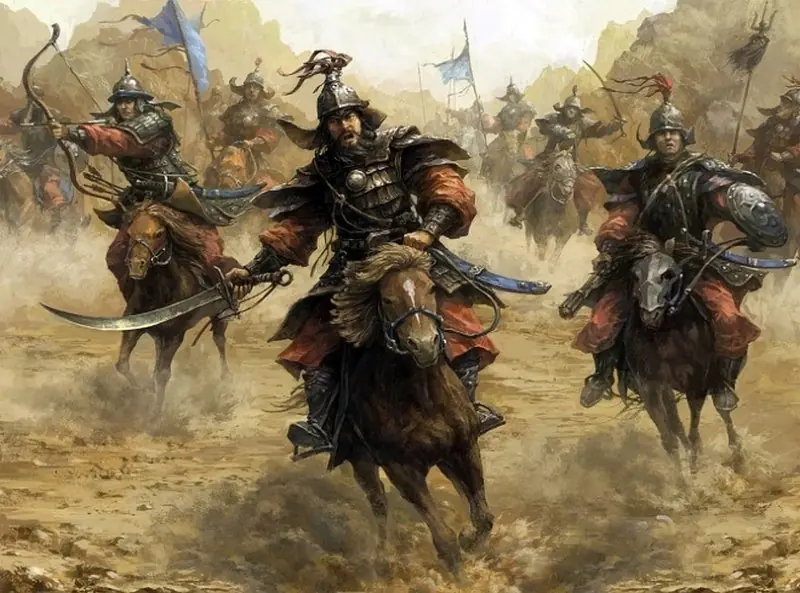
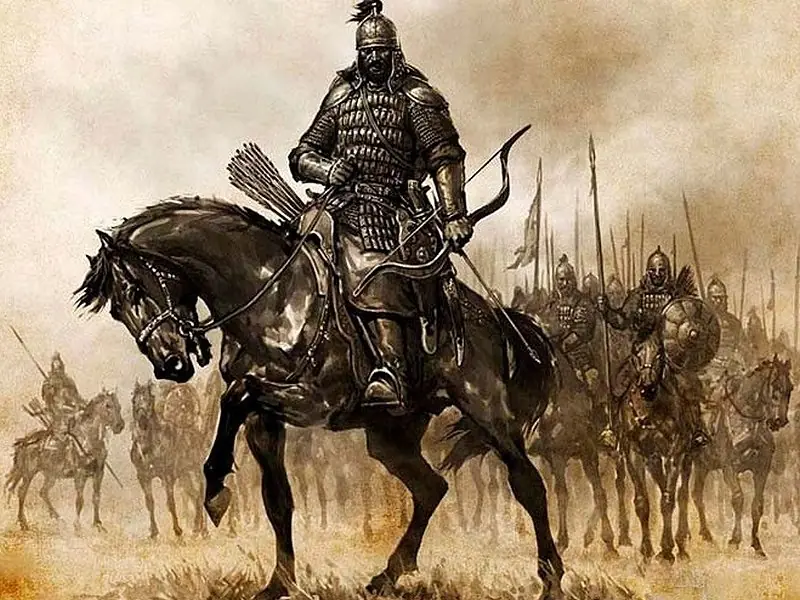
Genghis Khan’s military reforms revolutionized nomadic warfare. He abolished clan-based leadership, appointing commanders based on merit and loyalty rather than birth. The army organized into decimal units: tens, hundreds, thousands, and the 10,000-strong tumen. Two elite guard detachments protected the khan around the clock. A thousand bagaturs—proven warriors—formed the imperial guard prototype. Every aspect of this new state served war: the Mongol Empire was essentially a permanent military machine.
The Mongols called their state “Mengge” or “Mungu”—meaning “Silver”—following ancient traditions where the Liao dynasty was “Iron” and the Jin dynasty was “Golden.” The title “Genghis Khan” itself proclaimed universal sovereignty, while Temujin remained his personal name. In 1207, the Mongol Empire launched what it considered holy war against China’s Jin dynasty, responsible for killing previous Mongol leaders including Temujin’s father.
Read More:
Conquest of China and Central Asia
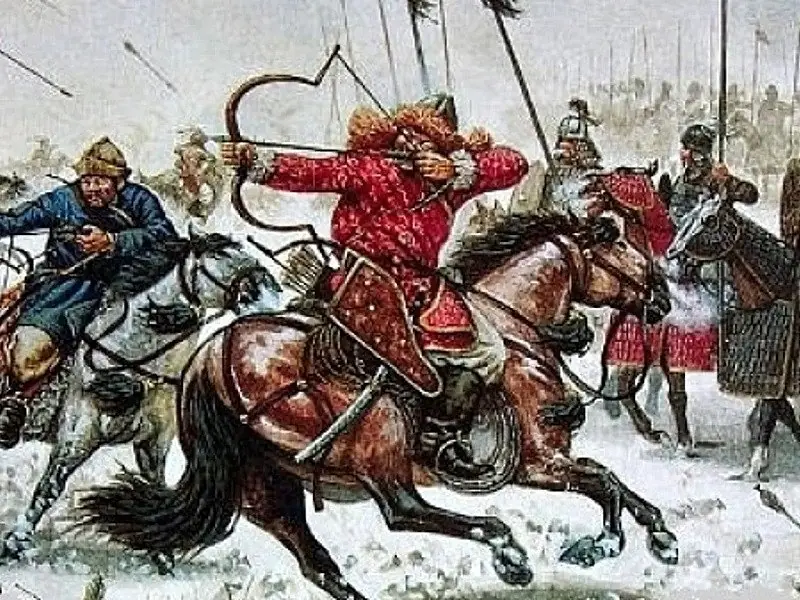
The Mongol Empire’s expansion began systematically. Under Jochi (Genghis Khan’s eldest son) and General Subedei, nomadic tribes along the forest-steppe border submitted. By 1208, Mongol forces attacked the Jin Empire’s western frontier, captured Uyghur lands, and prepared for full-scale invasion. Between 1212 and 1214, they seized Chinese territories, defeated imperial armies, and captured the Western and Middle Capitals.
When the Jin Emperor fled to Kaifeng in summer 1214, the Mongols occupied abandoned Zhongdu. By 1215, they controlled the Southern Capital as well, effectively subjugating northern China. With this victory secured, Genghis Khan turned westward toward richer prizes.
Central Asia’s Khwarezmian Empire possessed legendary wealth but foolishly provoked the Mongol Empire by murdering a trade delegation. The subsequent campaign (1219-1225) annihilated Khwarezm, adding 3.6 million square kilometers to Mongol control—modern Uzbekistan, Turkmenistan, Kazakhstan, Tajikistan, plus portions of Afghanistan, Iran, Oman, the UAE, and Azerbaijan. The speed and completeness of this conquest demonstrated Mongol military superiority over settled civilizations.
First Contact with Europe
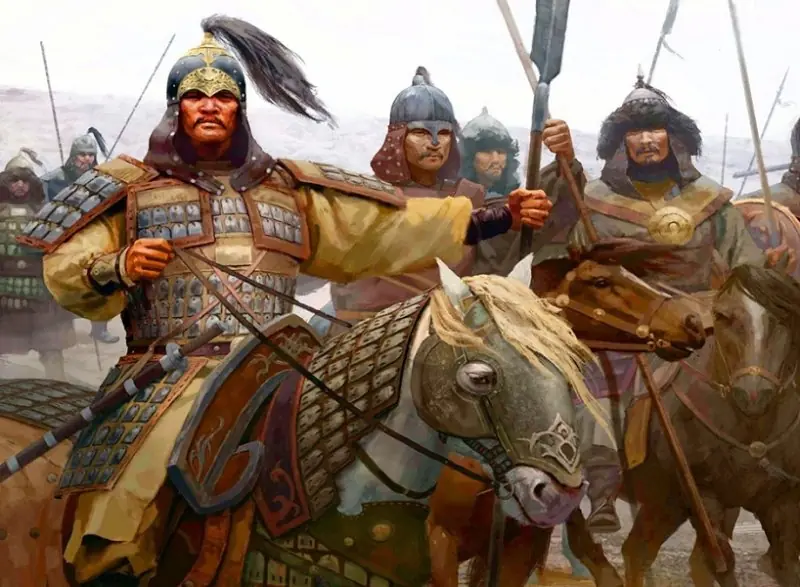
The Mongol Empire’s western expansion brought inevitable conflict with Eastern Europe. On May 31, 1223, General Subedei defeated a coalition of Kyiv, Chernigov, Galician princes, and Polovtsian Khan Kotyan at the Battle of the Kalka River. However, supply line difficulties forced Mongol withdrawal. Returning east, Subedei suffered defeat against the Volga Bulgars—one of the Mongol Empire’s rare setbacks—before rejoining main forces in 1224.
Genghis Khan died in 1227 during the final campaign against the Tangut Xi Xia kingdom. After traditional two-year mourning, his third son Ögedei became Great Khan in 1229, continuing expansion with equal energy.
The Western Campaign: Batu Khan and the Golden Horde
The 1235 kurultai planned massive multi-directional expansion: east against Korea, south against China’s Song dynasty, middle-east reinforcing Persian viceroy Chormagan, and west against the Polovtsians, Bulgars, and Russians. The western campaign would create the Jochi ulus—later called the Golden Horde—under Batu Khan, Jochi’s eldest son.
Leading veteran commanders including 60-year-old Subedei, Batu’s tumens attacked Volga Bulgaria in 1236, then struck Ryazan Principality that December. Successive victories followed: Ryazan, Kolomna, Moscow (January 1238), Vladimir, Torzhok, Tver. Only Kozelsk resisted fiercely, earning Mongol respect as the “evil city” for its stubborn defense.
After suppressing Mordovian rebellions and capturing Murom, Pereyaslavl, and Chernigov, Batu seized Kyiv, Galich, and Vladimir-Volynskyi in 1240. Preparing to invade Hungary, he quarreled with princes Guyuk and Buri, who withdrew their tumens—reducing forces but eliminating command conflicts.
In 1242, the Mongol Empire’s western army occupied Krakow and crushed Polish-German knights at Legnica. Batu ravaged Hungary, captured Zagreb, and reached the Adriatic at Split. Scouts approached Vienna before Austrian knights repelled them.
Multiple factors halted further advance: Hungarian partisan resistance, European militia attacks, unsuccessful castle sieges, unfavorable weather, and army famine. Then news arrived that Great Khan Ögedei had died (December 1241). Batu abandoned the campaign, returning through devastated Serbia and Bulgaria to compete in the succession struggle.
Read More:
Fragmentation and the Yuan Dynasty
The Mongol Empire faced governance crisis from its sheer scale. By 1241-1243, Mongol forces controlled Anatolia (Asia Minor), making it an Ilkhanate vassal until 1335. But administering territory containing 110 million people—one-quarter of humanity—proved impossible from a single center.
A decade of interregnum (1242-1251) ended with Möngke Khan’s election. His reign (1251-1259) saw continued Middle Eastern expansion: Baghdad fell in 1258, destroying the Abbasid Caliphate. Syria and Palestine campaigns followed, culminating in the 1260 Battle of Ain Jalut where Egyptian Mamluks dealt the Mongol Empire its first major defeat—halting westward expansion permanently.
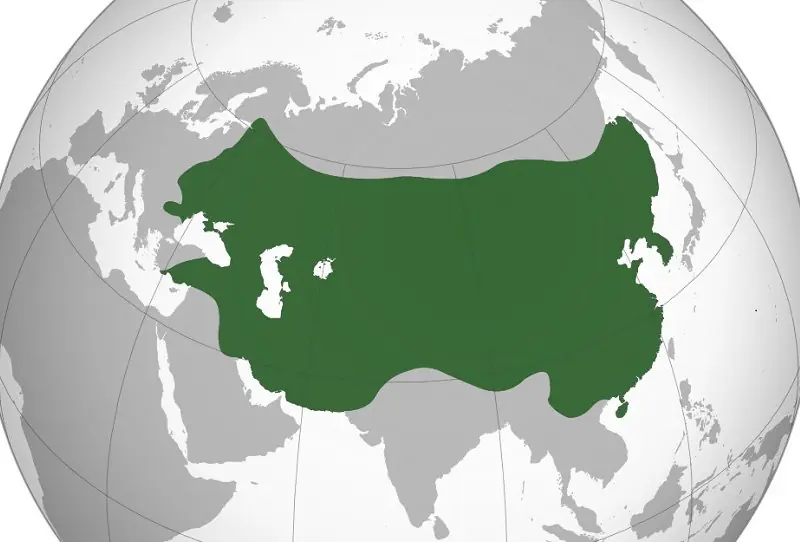
Möngke’s death triggered civil war between his brothers Kublai and Ariq Böke. By 1269, the unified Mongol Empire had fragmented into autonomous uluses: the Golden Horde (Russia), Ilkhanate (Persia), Chagatai Khanate (Central Asia), and Kublai’s Yuan dynasty (China). In 1279, Kublai completed Song dynasty conquest, founding the Yuan Empire encompassing all China.
Kublai’s subsequent adventures—Vietnam, Burma, Java invasions, and the 1281 attempted Japanese conquest—largely failed. After his 1294 death, Mongol Empire expansion effectively ceased. In 1301, the empire formally became a federation under nominal Yuan leadership, but real unity had vanished.
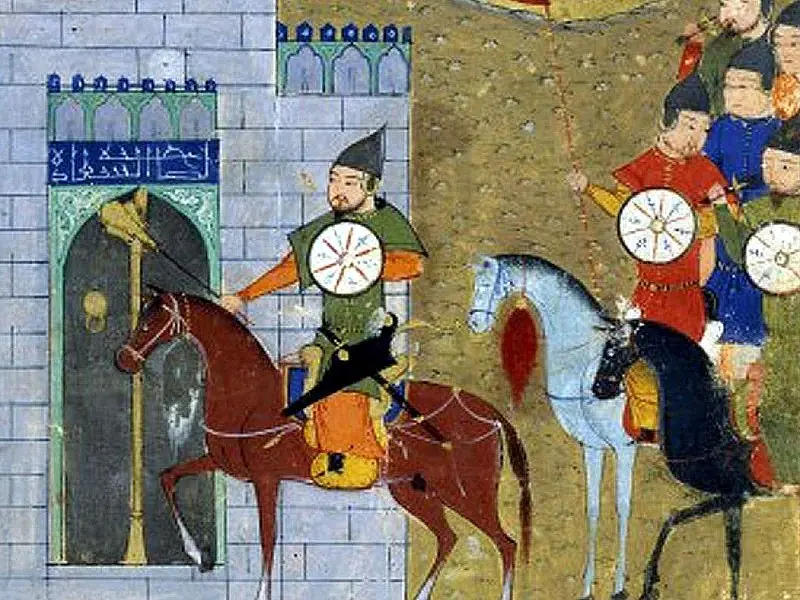
Collapse and Legacy
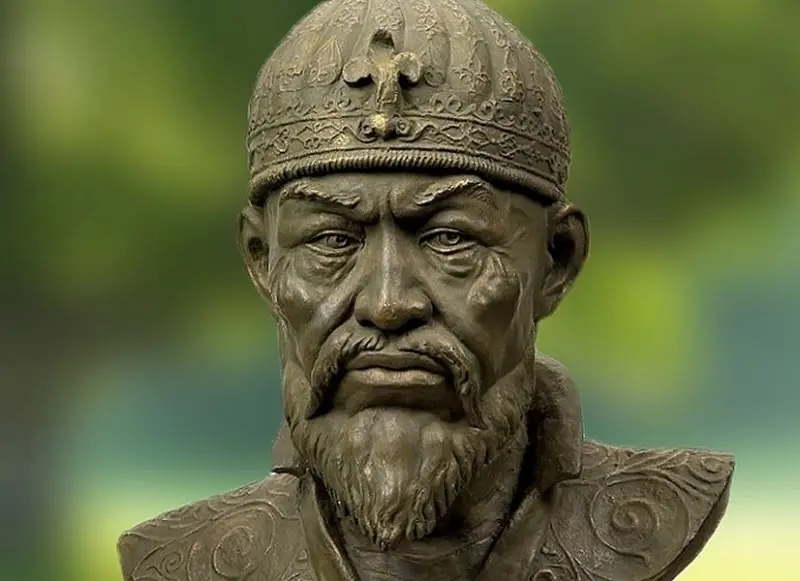
The Mongol Empire’s final disintegration accelerated through the 14th century. The last unified manifestation—the Golden Horde—collapsed in 1459 after devastating wars between Timur (Tamerlane) and Tokhtamysh Khan (1388-1395). Successor khanates—Astrakhan, Kazan, Crimea, Kazakh, and Siberia—were minor shadows of the original superstate.
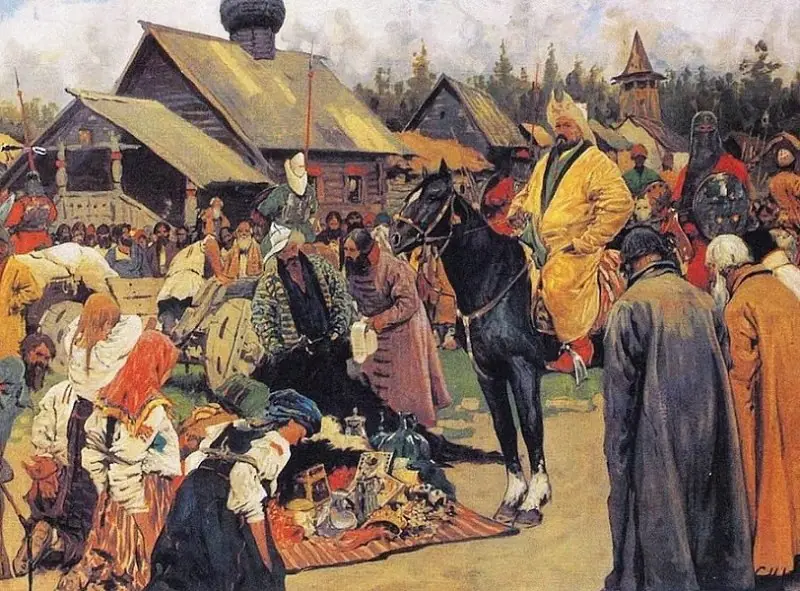
Yet the Mongol Empire’s influence persists. Historical literature extensively documents its cultural, scientific, and religious impacts across Eurasia. Europeans acquired gunpowder, printing, and the compass through Mongol channels. The abacus, steel production, eyeglasses, porcelain, and zinc glass all traveled westward via imperial connections. The Pax Mongolica briefly secured trade routes connecting East Asia to the Mediterranean, enabling Marco Polo’s famous journey.
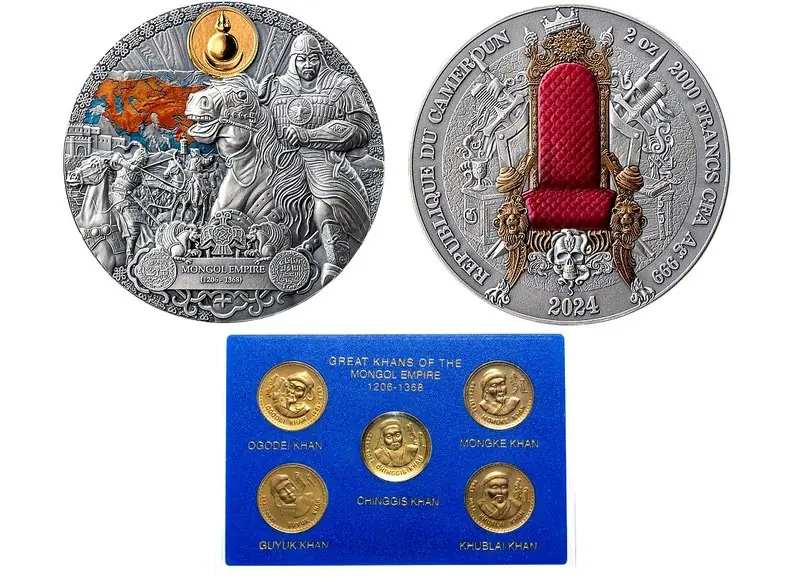
Modern commemoration reflects this legacy. Mongolia issued brass tokens depicting Great Khans (1993). In 2024, Cameroon minted 500 silver 2,000-franc coins dedicated to the Mongol Empire. These numismatic tributes acknowledge an empire that, despite its brief existence, permanently altered world history—demonstrating both the possibilities and limits of nomadic conquest in an age of agricultural civilizations.
Read More:
Primary Topics: Mongol Empire, Genghis Khan, Mongol Empire history, Temujin, Golden Horde, Batu Khan, Mongol conquests, Yuan dynasty, Kublai Khan, Ögedei Khan, Mongol military, Subedei, Battle of Kalka River, Siege of Baghdad, Pax Mongolica, Mongol Empire collapse, Timur and Tokhtamysh, largest contiguous empire